
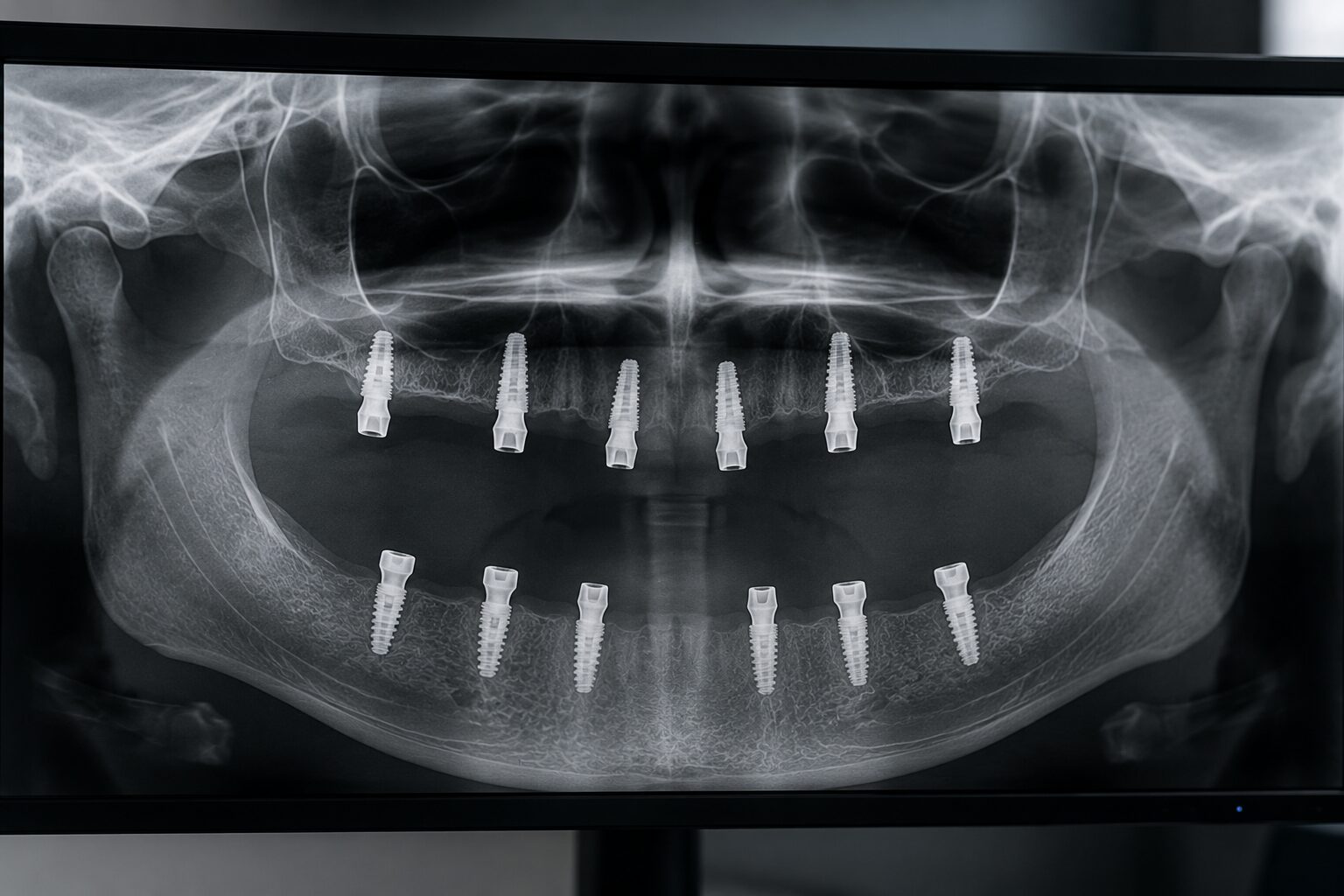

One of the most common questions patients ask before implant treatment is: “Do all teeth need to be removed for dental implants?”
This concern grows especially after hearing about full-arch treatments such as All on 4 and All on 6. The first thought is usually: “Will my healthy teeth be removed too?”
The short answer: No, not every patient needs all teeth removed. In some situations extraction may be part of the plan, but that decision should always be individual.
Is Tooth Extraction Always Needed Before Implants?
Extraction is not automatically required. The decision depends on how many teeth are missing, the health of the remaining teeth, bone condition, and the treatment type being planned.
If only one tooth is missing, a single implant can be placed without touching the neighbouring teeth. In that case, tooth extraction before implants usually is not part of the discussion at all.
Do You Need All Teeth Removed Before Implants?
For most patients, the answer is no. A full-arch approach is considered only in specific situations:
- Most teeth are severely damaged
- Advanced gum disease (periodontitis) is present
- There is significant mobility and bone loss
- The remaining teeth cannot be preserved long term
If none of these apply, removing all teeth for implants is generally unnecessary.
Are Healthy Teeth Removed for All on 4?
This is the concern patients raise most often. A healthy, functional tooth should not be extracted simply to make treatment easier.
However, a tooth that looks healthy from the outside may have lost the bone support around it. Without X-rays and a clinical examination, it is not possible to say whether a tooth is truly stable.
That is why the decision is based on bone support, root condition and long-term prognosis rather than appearance alone.
How Is Tooth Extraction Before All on 4 or All on 6 Planned?
All on 4 and All on 6 are designed for patients who have lost most of their teeth, or whose remaining teeth cannot be saved.
In these treatments the arch is usually made edentulous, because the fixed prosthesis is planned to restore the entire jaw. So extraction can be part of the process by design.
The key point: All on 4 or All on 6 is not the first option for everyone. If teeth can still be preserved, alternatives that protect them should be evaluated first.
When Might Extraction Be Necessary?
- Fractured or unrestorable root structure
- Mobile teeth due to advanced bone loss
- Recurring sources of infection
- Decay beyond restorable limits
- Tooth positions incompatible with the planned fixed prosthesis
When Can Teeth Be Preserved?
In many patients some natural teeth can be kept. For example:
- If only posterior teeth are missing, implants can be placed without touching the front teeth
- Teeth that can recover with gum treatment are preserved
- Partial solutions with implants and bridges may be possible
How Should the Decision Be Made?
A proper evaluation includes:
- Panoramic X-ray and, when needed, 3D tomography
- Measuring gum and bone levels
- Assessing the prognosis of each tooth individually
- Considering patient expectations and general health
Being told “all your teeth will be removed” without a proper examination is not a sound approach.
Final Thoughts
Short answer: No, most patients do not need all teeth removed.
The longer answer matters more: extraction depends on the health of the teeth, the bone condition and the chosen treatment plan. Preserving what can be preserved should always come first.
So the better question is not “Will all my teeth be removed?” but “Which of my teeth can be saved?”